
Crawl space vapor barrier in Fayetteville AR - a drier crawl space under your floors
Musty smell or damp floors from below? We deal with the water first, then lay and seal a liner that keeps the space drier.
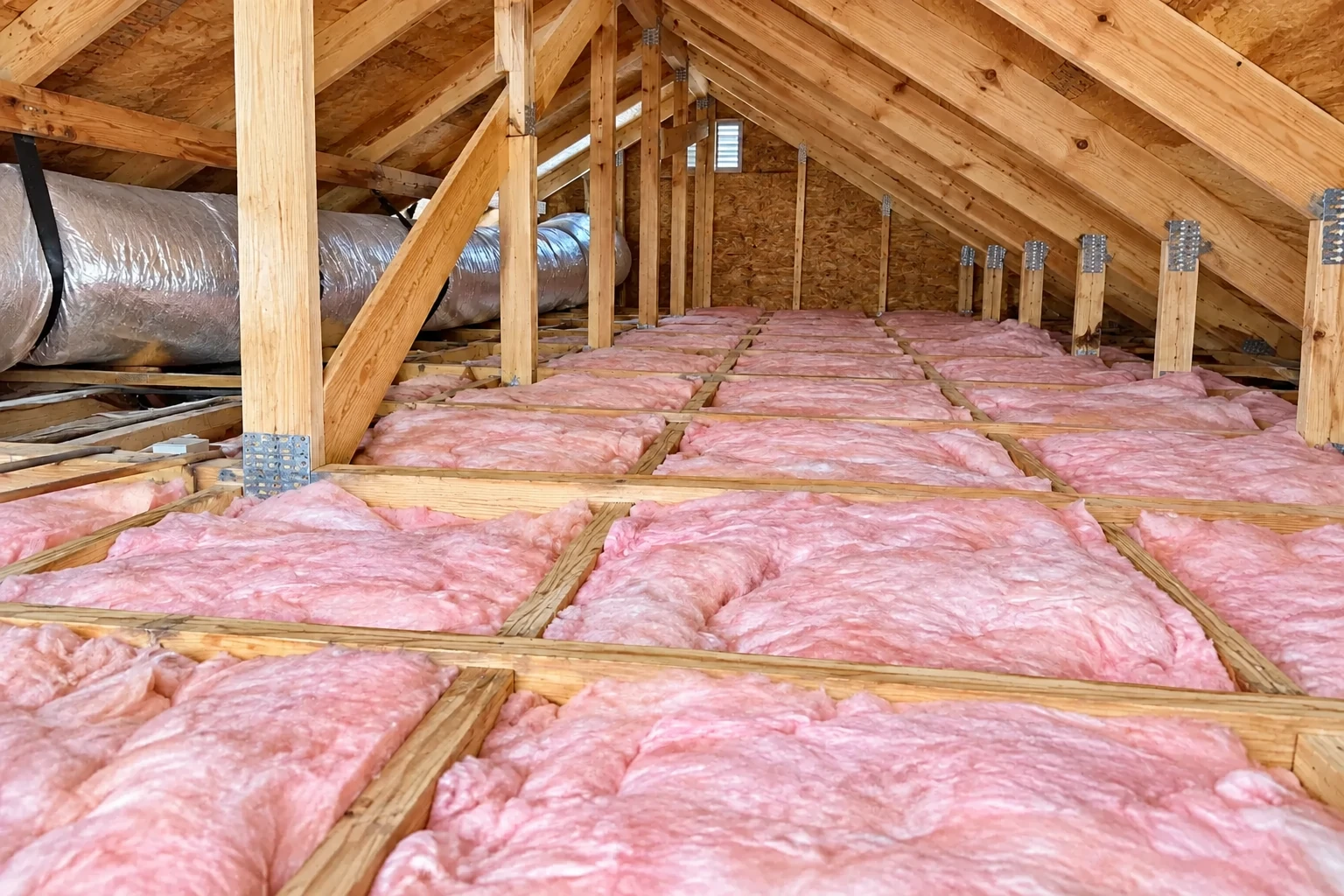
Do I need a vapor barrier in my crawl space?
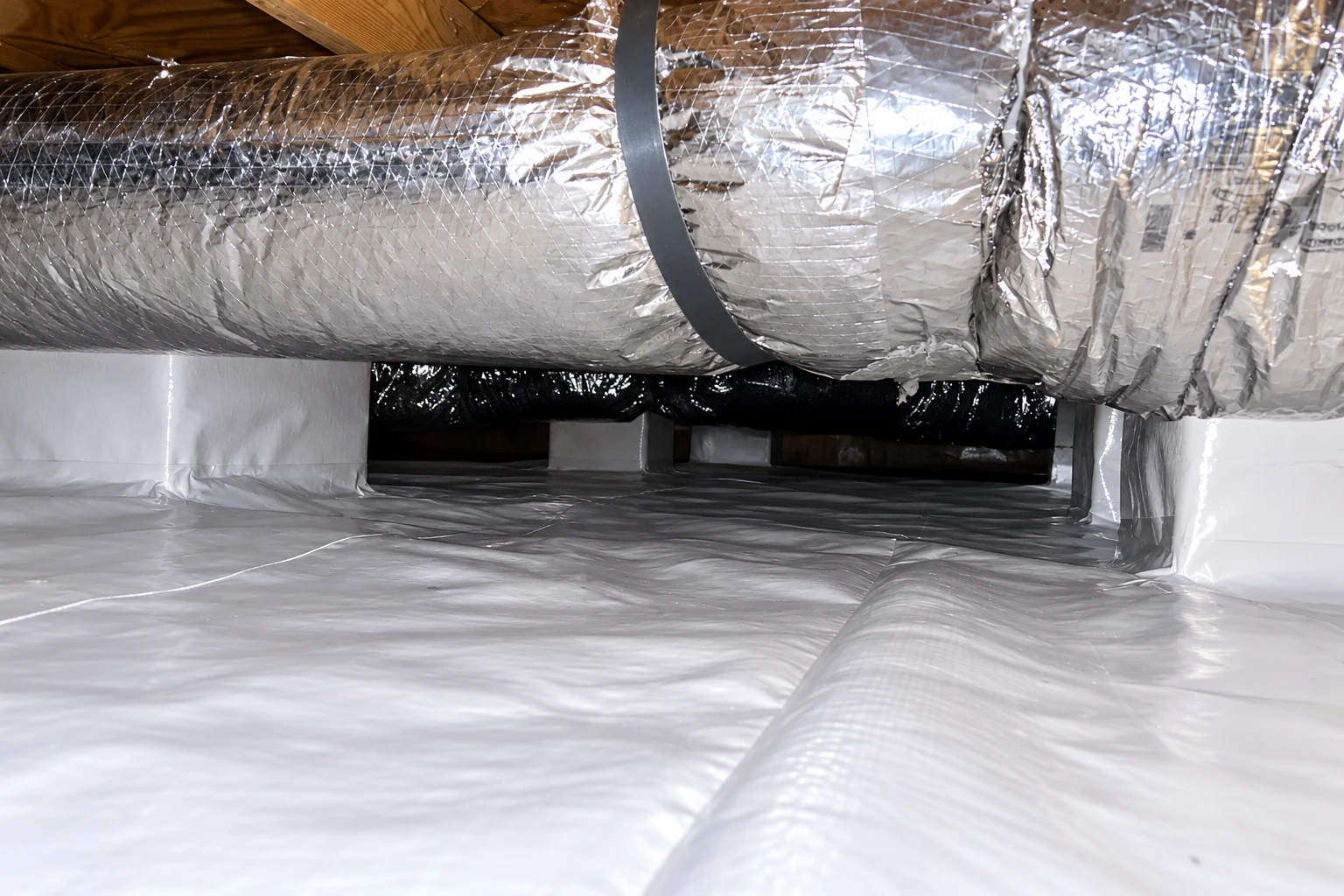
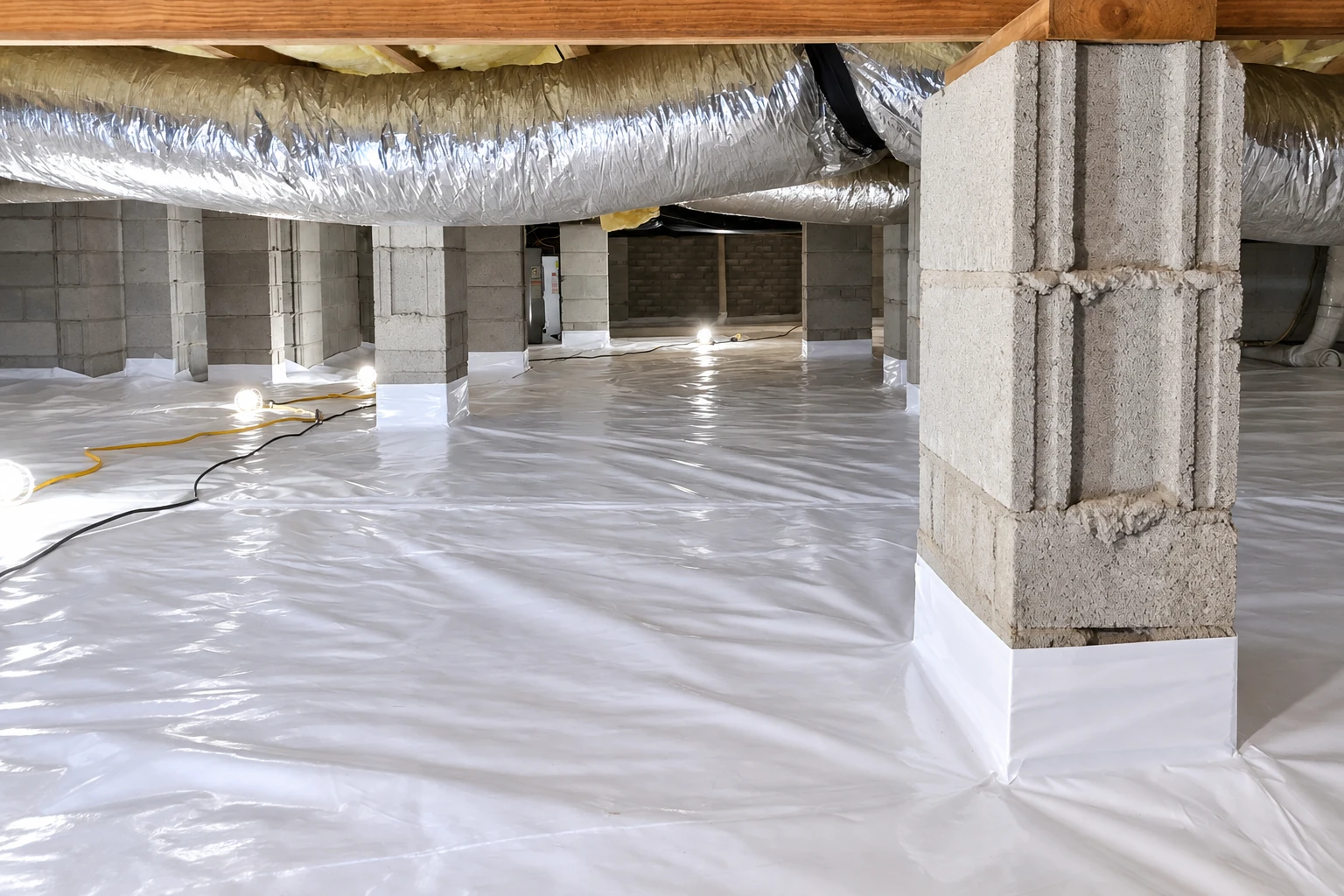
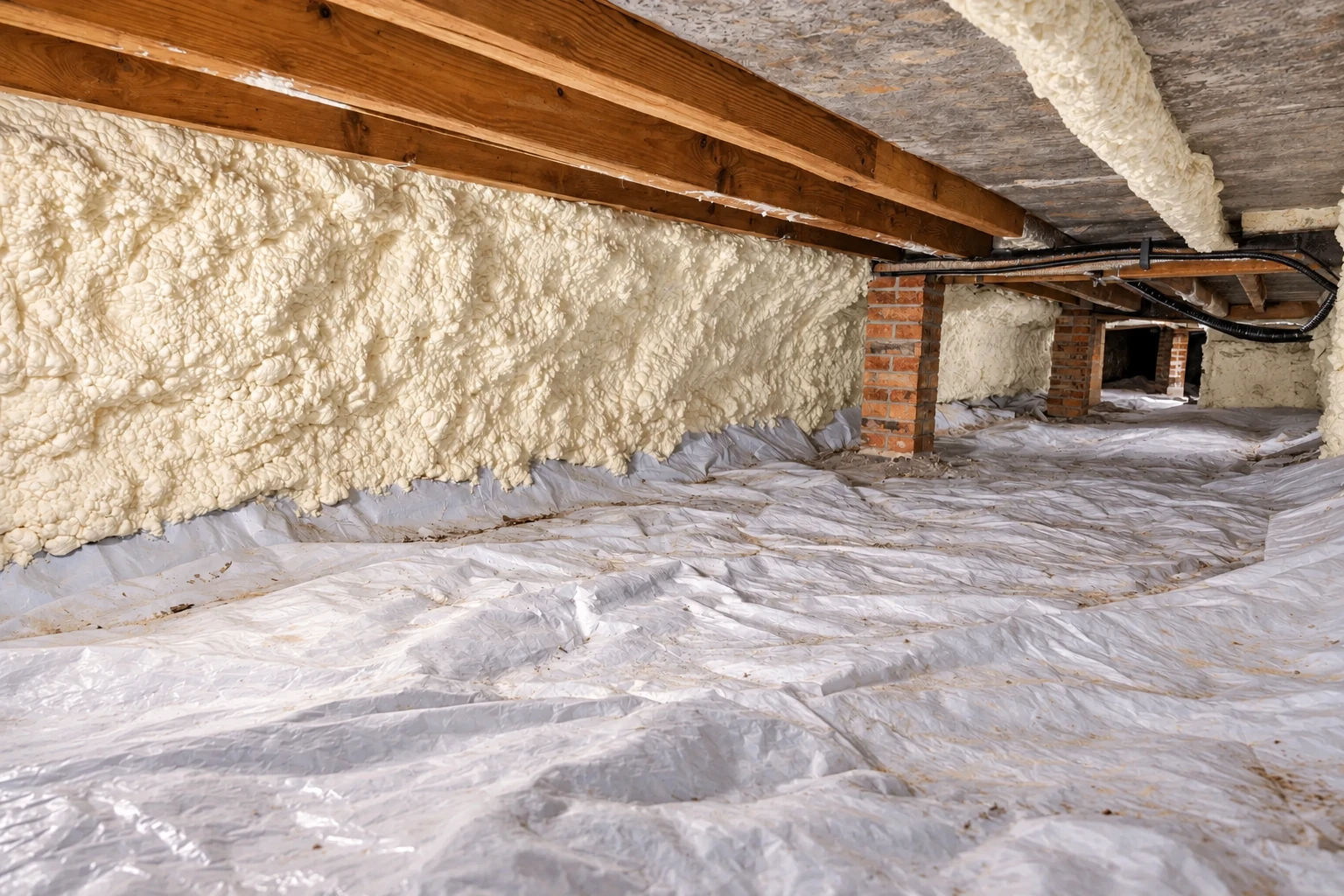
A crawl space vapor barrier in Fayetteville is a sheet of heavy plastic we lay over the dirt floor and up the foundation walls, then seal at every seam and edge. It cuts down the water that evaporates out of the ground, so the space under your house stays drier.
Most people call because of a musty smell, a damp floor or a power bill that won't come down, and the crawl space is often where it starts. C&J Fayetteville Insulation Company is based in Fayetteville and works in the cities around it across Northwest Arkansas, and the first thing I sort out with you is whether your house needs a liner alone or a fully closed crawl space, with the vents shut and the air down there kept dry. The price mostly comes down to the size of the space, whether water has to be drained first, what equipment sits under the floor and which of those two setups fits. Drainage or repairs that have to come first drive the schedule more than the liner does, and the estimate gives you the figure for your own crawl space. Before work starts I check with Fayetteville Development Services about what your job needs, and when a permit is called for we handle the paperwork and the inspections.
- Fully licensed and insured.
- Free quotes on site.
- Expect a reply within 1 business day.
What a crawl space vapor barrier looks like
How we put in a crawl space vapor barrier
I start by going under the house to find where the water comes from, because a liner laid over a wet floor just hides the problem. Standing water gets dealt with before any liner goes down. Then we clear the floor of debris and sharp spots, lay the plastic over the dirt and up the foundation walls, and seal the seams and edges so moisture doesn't slip around it. Where someone has to crawl through to reach a furnace, ducts or a water heater, we use a tougher, reinforced liner, since a thinner sheet tears under knees and tools on those paths. We put the liner in near the end, after any other work under the floor, so it isn't torn up before the job is done.
A crawl space liner is one part of keeping a house dry. If you need a moisture barrier in walls or other parts of the house, that's our vapor barrier installation work. Warm air leaking out the top of the house pulls air up from below, so attic air sealing often goes with this job, closing the gaps around lights, pipes and the hatch so less crawl space air gets drawn through your rooms.
Why Fayetteville homeowners call us about crawl space moisture
I check every crawl space myself
I come out to look at every job myself, and our own installers do the work, so the person who prices it has actually been down there. If a liner won't fix your problem, I'll tell you that instead of selling it to you.
Cause first since 2023
I started this business in 2023 after years of upkeep for a property management company, where damp floors were one of the complaints I chased most. That's why we find the real cause under the house before we quote anything, for homeowners, landlords and property managers alike.
Fully licensed and insured in Arkansas
We're fully licensed and insured. In Arkansas a limited home improvement license covers only home projects under $50,000 in labor and material, while an unlimited one covers jobs of any size, so it's fair to ask any contractor which one they hold.
On this job the order matters most, because a liner over standing water only hides it. Call (479) 485-4960 or send us a request and I'll come take a look.
Get a free crawl space vapor barrier estimate
Send the form and we'll get back to you within one business day to set a time. I'll come look at your crawl space with you and give you a free estimate, with no obligation to go ahead.
- Fully licensed and insured.
- Free quotes on site.
- Expect a reply within 1 business day.
What happens after you call about your crawl space?
Call or send a request
Call (479) 485-4960 or fill out the form, and we'll set a time for me to come out. Have a rough size for the crawl space handy, plus whether water stands in it and what equipment is down there.
I look under the house
I go into the crawl space with you, find where the moisture is coming from and check the vents, ducts and any gas equipment. Your estimate spells out the price, what has to happen first and whether a liner alone or a fully closed crawl space fits your house.
We do the work, then walk through
Our installers take care of any drainage or repairs that come first, then put in and seal the liner, and since it all happens below the floor you can usually stay home. Before we leave, we walk you through what we did.
Crawl space vapor barrier questions
How much does a crawl space vapor barrier cost in Fayetteville, AR?
A vapor barrier with a commercial dehumidifier for a 1,500 sq ft crawl space in Fayetteville usually runs about $4,300 to $8,000 for the whole job. That's the going rate in the area for a full closed setup, not our price, and a liner alone usually comes in lower. Your estimate gives you the figure for your own house, and the work is backed by our satisfaction guarantee.
Is sealing my crawl space vents enough to keep it dry?
No, and sealing the vents by themselves can actually raise the moisture down there. If a gas furnace or water heater in the crawl space relies on natural venting, closing the vents can also turn deadly, so we check every piece of fuel-burning equipment before anything gets closed up. Closing a crawl space properly means planning the liner, the drying and the exhausts together.
How do I deal with standing water in my crawl space before a vapor barrier?
Get the water out first, usually with a drain or a sump pump, before any liner goes down. A crawl space with standing water that can't be fixed isn't a good candidate for closing up at all, so drainage comes first in both the plan and the budget.
Should I test for radon before sealing my crawl space?
If you live in a high radon area, it's worth considering. ENERGY STAR's advice is to consider a contractor radon test and a radon mitigation system before sealing a house. Arkansas has no laws setting qualifications for radon professionals, and the state health department doesn't license or certify anyone to test or mitigate, so there's no state credential to look for.
What causes a damp, musty crawl space in Fayetteville?
Usually it's humid outside air coming in through the vents, plus water evaporating up from the dirt floor. Research on crawl spaces in climates like ours shows vented ones tend to get wetter, not drier, and that moisture condenses on the cooler wood of the floor framing, where it can lead to mold and wood damage.
Do I need a dehumidifier with a crawl space vapor barrier?
If you're closing the crawl space fully, yes, it needs a way to dry the air, such as a dehumidifier or conditioned air from your system. A fully closed design also sends the kitchen, bathroom and dryer exhausts outside instead of into the crawl space. With the vents left as they are, a liner alone still cuts the moisture coming up from the ground, and I'll tell you at the estimate which one your house needs.
Work that goes with a crawl space vapor barrier
Vapor barrier installation
When moisture is getting into walls or other parts of the house, not just the space under the floor.
Attic air sealing
Stops warm air escaping up top, which keeps it from pulling damp air up from the crawl space into your rooms.